
Some billboards are designed to be seen.
Others are designed to be talked about.
Netflix’s latest Sunset Boulevard stunt clearly belongs to the second group.
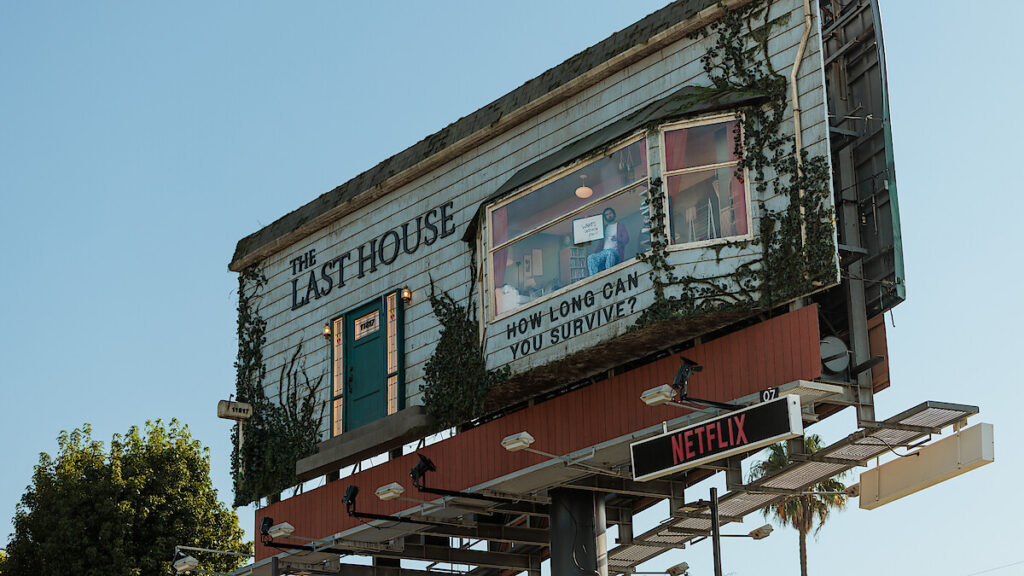
For three days, Netflix placed a man inside a furnished room built about 30 feet above the corner of Sunset Boulevard and Selma Avenue in Los Angeles. Wearing pajamas and a bathrobe, he lived inside the billboard, waved at commuters, and communicated with people below using a whiteboard.
Under the window was one simple question:
“How long can you survive?”
The installation promoted Netflix’s new sci-fi thriller The Last House, about a family suddenly sealed inside their home and forced to survive in isolation.
But what makes this campaign interesting isn’t just the billboard itself.
The Billboard Wasn’t the Media. The Stunt Was the Media.
A traditional billboard depends on traffic. People drive past it, see the message, and hopefully remember it.
Netflix created something people wanted to photograph, film, share, and talk about.
The physical billboard became social media content, news coverage, conversation, and publicity.
One outdoor placement suddenly created multiple layers of media.
Netflix Didn’t Explain the Movie. It Made People Experience the Idea.
Instead of using a standard movie poster with actors, a title, and a release date, Netflix translated the movie’s main concept into real life.
You see a man trapped inside a room.
You don’t immediately know why.
You start asking questions.
Who is he? Is he really staying there? Why is he inside a billboard? What exactly is Netflix promoting?
That curiosity leads you directly to the movie.
The advertising happens after the curiosity—and that makes it much more powerful.
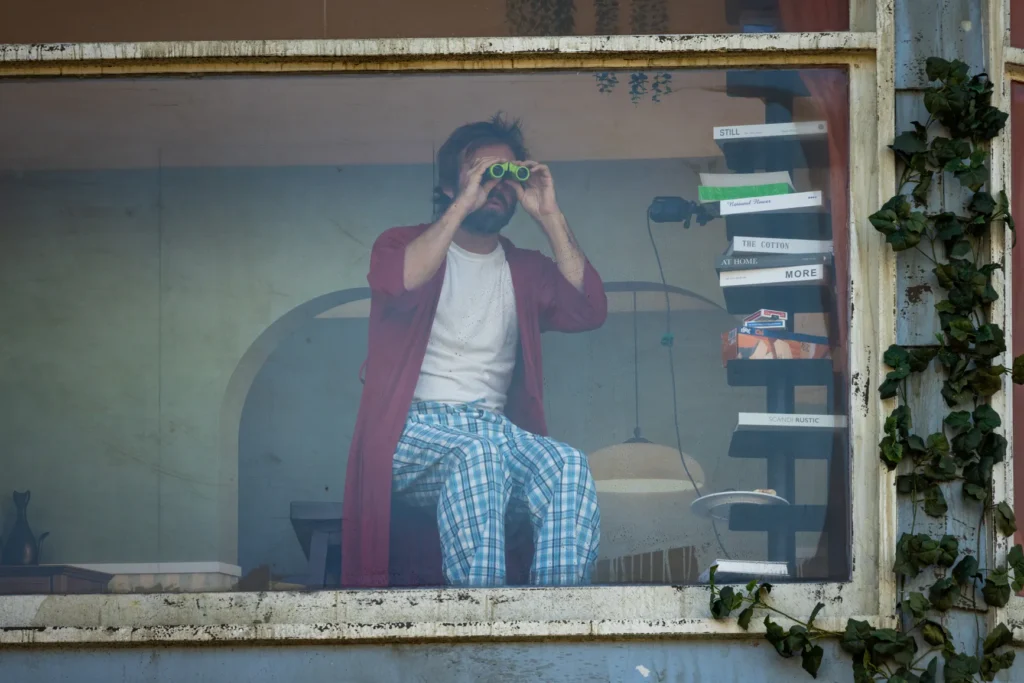
A Real Person Made It Almost Impossible to Ignore.
We’re surrounded by digital screens, 3D billboards, and AI-generated visuals.
But seeing an actual person living above Sunset Boulevard creates a completely different reaction:
Wait… is that guy really up there?
The bathrobe, binoculars, and handwritten messages turned a static billboard into a live performance.
Every time someone passed, something different could be happening.
That unpredictability gave people a reason to look again.
The Campaign Was Built for Both the Street and the Phone.
Great outdoor advertising today has two audiences: the people physically passing it and the people who will later see it through social media.
Netflix designed this perfectly.
A strange room.
A real person.
A simple question.
A concept you understand in seconds.
It works just as well in an Instagram Reel as it does on Sunset Boulevard.
The result is a powerful marketing loop:
Outdoor → Social Media → PR → Conversation → Streaming
The Biggest Lesson for Brands
People rarely share advertisements simply because they are advertisements.
They share stories, surprises, and experiences.
Netflix didn’t just buy billboard space.
It created a story people wanted to tell.
And that may be one of the most important questions for brands today:
Instead of asking,
“What should our ad say?”
ask,
“What can we create that people will want to talk about?”
That’s when advertising starts becoming culture.
At RACOOB, we help brands turn ideas into strategies, identities, products, and campaigns designed to stand out and be remembered.
If you’re ready to create something people talk about—not just scroll past—
Let’s create a brand that matters.
Message us at RACOOB.